
Where Can You Buy Nepali Groceries in Japan? How to Find Shops, Read Food Labels, Substitute with Japanese Ingredients, and Order from Abroad
Published: · Updated:
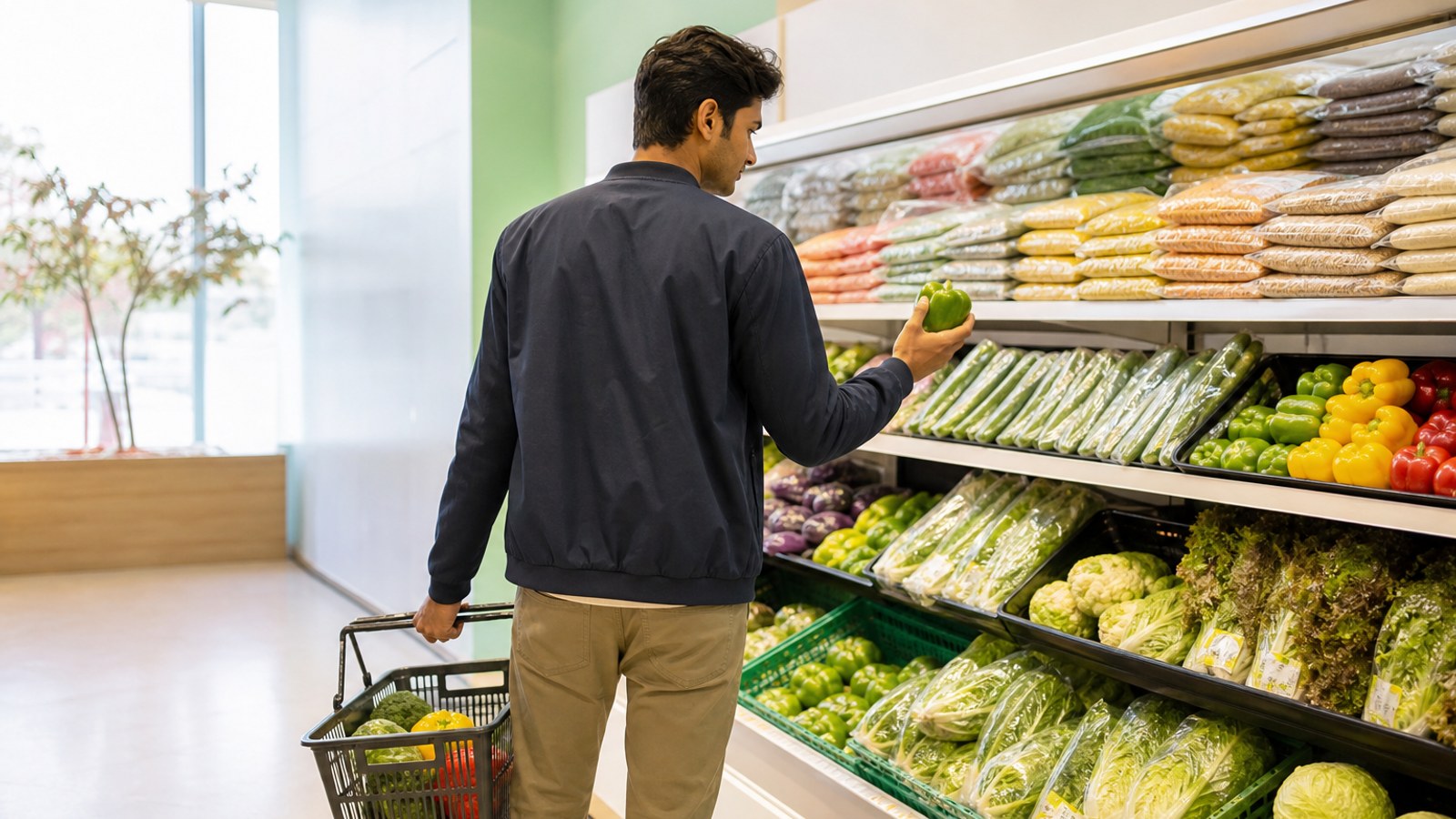
After a little while in Japan, many people start to miss the taste of Nepal. This guide covers how to think about buying ingredients after you arrive in Japan. Whether you can bring food in from Nepal (the quarantine and customs rules) is explained in a separate guide, Can You Bring Nepali Food and Spices to Japan?. We do not repeat it here.
This guide does not name any specific shop or brand. Shops open, close and change what they sell, and much of this cannot be confirmed from official information. So instead of saying "it is sold at such-and-such a place," we focus on how to search for yourself and how to read the labels and other information you should check when you buy.
We checked the official pages listed below on 9 November 2026. The items covered by food labelling can change with revisions. For example, on 1 April 2026, cashew nuts were added to the specified ingredients (特定原材料) and pistachios were added to the items equivalent to specified ingredients (特定原材料に準ずるもの). Before you buy, check the package label with your own eyes.
The short version
- Find shops yourself, for example with a map app. We cannot say that there are more in cities. Search in the area where you live and check.
- When you buy, look at the "ingredients" (原材料名) and the allergy labelling (アレルギー表示) on the package. Japan has food labelling rules.
- Foods with the same name can contain different things. Processed foods may contain meat, gelatin and so on. If there is something you avoid for religious reasons or personal preference, check the label especially carefully.
- You can also think about making a substitute with Japanese ingredients. Start from the basic ingredients: beans, rice, vegetables, spices.
- When you order from abroad, the same quarantine rules as bringing food in apply. Take special care with meat products and plants.
- After you buy, be careful with refrigeration and heating. Food poisoning also happens at home.
1. How to think about finding shops
Where you can buy Nepali ingredients depends on the area, so this guide does not give shop names or a list. Please try searching yourself in the following ways.
- Search on a map app. Try several words, such as "ネパール 食材" (Nepali ingredients), "アジア食材" (Asian ingredients), "スパイス" (spices), "輸入食品" (imported food) and "ハラール" (halal). Searching in English, Nepali or katakana can give different results.
- There are several types of shops. Ordinary supermarkets, shops that sell imported food, shops for Asian ingredients, food floors of large stores, and online shops. What each shop has differs from shop to shop. Check opening hours and the location before you go.
- Ask people nearby. Teachers and staff at your school, senior international students, and friends from your country may know shops they often go to. However, information can be out of date, so check on a map or the shop's own notice before you go.
- Do not travel far assuming a shop has it. You may arrive and find they do not have it. It is safer to check by phone or on the shop's official notice before you go.
If a shop tells you "we don't have it," you do not have to keep searching. You can also make a similar dish with ingredients sold at an ordinary Japanese supermarket (chapter 3).
2. How to read food labels (Consumer Affairs Agency)
Packaged food sold in Japan, in packs, bags and so on, is subject to food labelling rules. We explain the basics based on the Consumer Affairs Agency's "Food Labelling You Should Know" (October Reiwa 8 edition).
Labels on processed food (the combined label)
Processed food sold in packs, cans or bags carries the required information together in one place. This is called the "combined label" (一括表示). The main items are as follows.
- Name (名称): What the food is called.
- Ingredients (原材料名): The ingredients used, listed in order of the amount used, largest first.
- Additives (添加物): The additives used, in principle also listed in order of the amount used, largest first.
- Net quantity (内容量): In grams, millilitres, number of pieces, and so on.
- Use-by date or best-before date, and storage method: Explained in the "Dates" section below.
- Name and address of the manufacturer (or seller): The company responsible for the label.
Separately, there is nutrition labelling (energy, protein, fat, carbohydrate, salt equivalent).
Look at the ingredients and the allergy labelling
If there is something you cannot eat for religious, health or personal reasons, first look at the "ingredients" (原材料名) and "additives" (添加物) columns.
For food allergy labelling, the following 9 items are the specified ingredients (特定原材料) whose labelling is mandatory.
- Shrimp (えび), cashew nuts (カシューナッツ), crab (かに), walnuts (くるみ), wheat (小麦), buckwheat (そば), egg (卵), milk (乳), peanuts (落花生)
Cashew nuts became a specified ingredient on 1 April 2026 (Reiwa 8). However, the Consumer Affairs Agency notice says there is a two-year transition period. So for some time you may find products in shops that still carry the old, pre-revision labels. If you have a cashew nut allergy, do not assume a product is free of them just because they are not on the label; check with the manufacturer if you need to.
Separately, there are 20 items for which labelling is recommended (not mandatory) (items equivalent to specified ingredients). They are almonds (アーモンド), abalone (あわび), squid (いか), salmon roe (いくら), oranges (オレンジ), kiwi fruit (キウイフルーツ), beef (牛肉), sesame (ごま), salmon (さけ), mackerel (さば), soybeans (大豆), chicken (鶏肉), bananas (バナナ), pistachios (ピスタチオ), pork (豚肉), macadamia nuts (マカダミアナッツ), peaches (もも), yam (やまいも), apples (りんご) and gelatin (ゼラチン).
Please note the following.
- Beef, pork, chicken and gelatin are items where labelling is "recommended," not mandatory. If they are not on the label, you cannot be sure they are not in the product. If you want to avoid meat or animal-derived ingredients, look at the whole ingredients list, and if you are unsure, ask the shop staff or the manufacturer's contact on the package.
- Sesame is not among the 9 items with mandatory labelling. If you have a sesame allergy, take extra care for the same reason.
- There are two ways of labelling. One is "individual labelling" (個別表示), which writes in brackets after an ingredient, such as "(contains wheat and soybeans)." The other is "combined labelling" (一括表示), which puts it together at the end, such as "(contains wheat and egg as part of the product)." When the same ingredient appears many times, the label may be omitted from the second time on.
- It may be written in a way that is clearly the same thing, such as "たまご" or "玉子" for egg.
- A label that says only "may contain" is not allowed. However, when the possibility that the allergen of another product made in the same factory gets in cannot be ruled out, a cautionary note such as "this factory also produces products containing ○○" is recommended.
With seasonings, protein hydrolysate and extracts, the name alone may not tell you what they were made from. Consumer Affairs Agency materials give label examples such as "protein hydrolysate (contains beef, salmon, mackerel and gelatin)."
If you have a severe food allergy, do not decide from the label alone, and follow your doctor's instructions. For symptoms and how to see a doctor, see the guide to seeing a doctor in Japan.
Dates: use-by date and best-before date
- Use-by date (消費期限): The date up to which the food is considered safe to eat if stored by the stated method. It is shown on foods that spoil easily, such as bento boxes, sandwiches and side dishes. After the date has passed, it is better not to eat it.
- Best-before date (賞味期限): The date up to which the food is considered to taste good if stored by the stated method. It is shown on foods that keep well, such as sweets, instant noodles and canned food.
Both dates apply only when the food is stored by the stated method and unopened. The Consumer Affairs Agency explains that after opening, you should eat it soon, even within the date.
Origin labelling
- Fresh food such as vegetables, fruit, fish and meat: The rule is to label the "name" and the "origin." Domestic products show a prefecture name and so on, and imported products show the country of origin.
- Processed food: For processed food made in Japan, the origin (or place of manufacture) of the most-used ingredient is shown. For example, "pork (USA)" or "wheat flour (made in Japan)."
- Rice: Bagged rice shows the place of production, variety, year of harvest and the time of milling.
If you want to know the more detailed rules on labelling imported food, check the Consumer Affairs Agency pages.
3. Ideas for substituting with Japanese ingredients
You may not be able to find some Nepali ingredients. In that case, it becomes easier to choose if you think from "what ingredients will I use, and what taste do I want" rather than "looking for an ingredient with the same name."
- Think from the basic ingredients. Many things are sold at ordinary supermarkets: rice, beans (dried, canned or in packs), vegetables, chicken, eggs, dairy products, spices and so on.
- Treat processed products and home cooking separately. Ready-made sauces and spice mixes may contain animal-derived ingredients or allergens. If you combine basic ingredients with single spices, you can decide the ingredients yourself.
- Do not aim for a perfect copy of the taste. Even ingredients with the same name differ in taste and texture by place of origin and variety. For rice, the origin and variety are written on the bag, so you can try several and find one you like.
- Check recipes and substitute combinations yourself, and try small amounts first. This guide does not say that any particular substitute "will taste the same."
- For unfamiliar ingredients, check the label and how to cook them. If you do not know how to eat something, ask the shop staff, or read the cooking instructions on the package.
4. Rules for ordering from abroad
You may have family in Nepal or a shop abroad send you food, or buy it online. In that case, think of Japan's quarantine rules the same way as for carry-on luggage. For details, see the guide to bringing food in. Here we give only the main points.
- Meat products: There are restrictions even by international mail. Even as souvenirs or for your own eating, you cannot bring them into Japan without an inspection certificate issued by the government agency of the exporting country (Animal Quarantine Service).
- Plants (beans, grains, raw materials for spices and so on): Small amounts and international mail are no exception. They must be inspected with an inspection certificate issued by the government agency of the exporting country. Items without a certificate are disposed of (Plant Protection Station). Depending on the item, some do not need a certificate and some are not subject to quarantine.
- Importing without an inspection certificate may bring penalties such as imprisonment for up to 3 years or a fine of up to 3 million yen (Plant Protection Station).
- Write what is inside on the outside of the parcel and on the declaration form. When plants are included, you are advised to have this clearly stated on the outside of the international mail and on the customs declaration.
- Some international courier companies do not handle plants. Check the company's notice before you ask someone to send things.
Shops abroad may not know Japan's quarantine rules. Even if they say "we can send it," that does not always mean it is fine under Japanese law. It is safest to check each item with the Animal Quarantine Service and the Plant Protection Station before you order. This guide does not explain import procedures under the Food Sanitation Act.
5. Storage and food poisoning prevention after you buy (Ministry of Health, Labour and Welfare)
Food poisoning happens not only in restaurants but also in meals at home. The Ministry of Health, Labour and Welfare explains that symptoms can be mild and may affect only one or two people, so it may be mistaken for a cold and go unnoticed. From "Six Points for Preventing Food Poisoning at Home," we introduce those related to shopping and storage.
The three principles of preventing food poisoning are to "not let bacteria get on food, not let them grow, and kill them."
- When you buy: Check labels such as the use-by date. Wrap meat and fish separately. Buy fresh food last. Go straight home without stopping anywhere and put it in the refrigerator as soon as you get home. If possible, take it home with an ice pack (or ice).
- When you store: As a guideline, keep the refrigerator at 10°C or below and the freezer at minus 15°C or below. Do not overfill the refrigerator; fill it to about 70%. Wrap meat and fish so juices do not leak, and keep them away from food you eat raw. Thaw frozen food in the refrigerator.
- When you cook: Wash your hands before you start. Wash vegetables well too. Heat food thoroughly; as a guideline, the centre should reach 75°C for 1 minute or more. When you use a microwave, make sure the food is heated evenly.
- When there are leftovers: Put them in a clean container and store them in small portions so they cool quickly. When you reheat them, heat them thoroughly. If food has been left too long, or if you think it is even slightly suspicious, throw it away without hesitation.
- Cook meat well. The Ministry of Health, Labour and Welfare explains that raw or undercooked beef, pork and so on can cause serious food poisoning.
Not every Nepali ingredient can be treated the same way as a Japanese ingredient. Follow the storage method and date shown on the label.
Frequently asked questions
Where can I buy Nepali ingredients in Japan?
This guide does not give shop names or a list, because shops differ by area and over time. Search a map app with words such as "ネパール 食材", "アジア食材" or "輸入食品," and check the opening hours before you go. You can also ask your school teachers or senior international students.
I cannot read the Japanese on the bag. What should I do?
First, learn where the items are on a food label, and it becomes easier to read: "name" (名称), "ingredients" (原材料名), "additives" (添加物), "net quantity" (内容量), "best-before or use-by date" (賞味期限・消費期限), "storage method" (保存方法) and "manufacturer" (製造者). For kanji you cannot read, you can check with the camera function of a translation app on your smartphone. However, if there is something you must avoid because of an allergy or religion, do not rely on translation alone; check with the shop staff or the manufacturer.
Can I tell from the label whether it contains pork or beef?
When the meat itself is an ingredient, it is written in the ingredients list. However, labelling of pork, beef, chicken and gelatin as allergy labelling is only recommended (not mandatory). It may also be unclear whether seasonings and extracts contain animal-derived ingredients. If there is something you want to avoid, look at the whole ingredients list, and if you are unsure, ask the manufacturer.
How can I check whether a food is halal?
This guide does not explain halal certification or labelling, because we could not confirm it from official information. Read the product or the shop's notice, and if you are unsure, ask the shop or the manufacturer directly.
Can my family in Nepal send me ingredients?
Meat products can almost never be brought into Japan. Plants (beans, grains, raw materials for spices and so on) in principle need an inspection certificate. Before they send anything, check with the Animal Quarantine Service and the Plant Protection Station. For details, see the guide to bringing food in.
Can I eat food after its best-before date?
The best-before date is the date up to which the food "tastes good," and it means something different from the use-by date. However, the date applies to food that is unopened and stored by the stated method. After opening, or if it was stored badly, food can spoil even within the date. If you think it is even slightly suspicious, do not eat it.
What to do next
First, try finding a few shops near you on a map app. Next, build the habit of looking at the "ingredients" and the "allergy labelling" on the package of the food you buy. For living costs overall, see the guide to the cost of studying; for what to do after arriving in Japan, see the guide to procedures after arrival. If you feel unwell, see the guide to seeing a doctor. You can contact this site, but it does not guarantee admission or a residence status (visa). This site is free to use.
Sources
- Consumer Affairs Agency: Food Labelling You Should Know (for consumers), October Reiwa 8 edition
- Consumer Affairs Agency: Information on food allergy labelling
- Consumer Affairs Agency: What is allergy labelling (as of April Reiwa 8)
- Consumer Affairs Agency: Food labelling
- Ministry of Health, Labour and Welfare: Food poisoning
- Ministry of Health, Labour and Welfare: Six points for preventing food poisoning at home
- Animal Quarantine Service: Souvenirs such as meat products
- Plant Protection Station: Frequently asked questions (bringing items from overseas)
- Plant Protection Station: Regulations on bringing plants into Japan from overseas
- Consumer Affairs Agency: Labelling of foods containing allergens (administrative notice of 1 April Reiwa 8)
- Immigration Services Agency of Japan
- Study in Japan (JASSO)