
What happens if your attendance rate at a Japanese language school is low? The 80% and 50% standards, school guidance, reports to Immigration, and the effect on extending your period of stay
Published: · Updated:
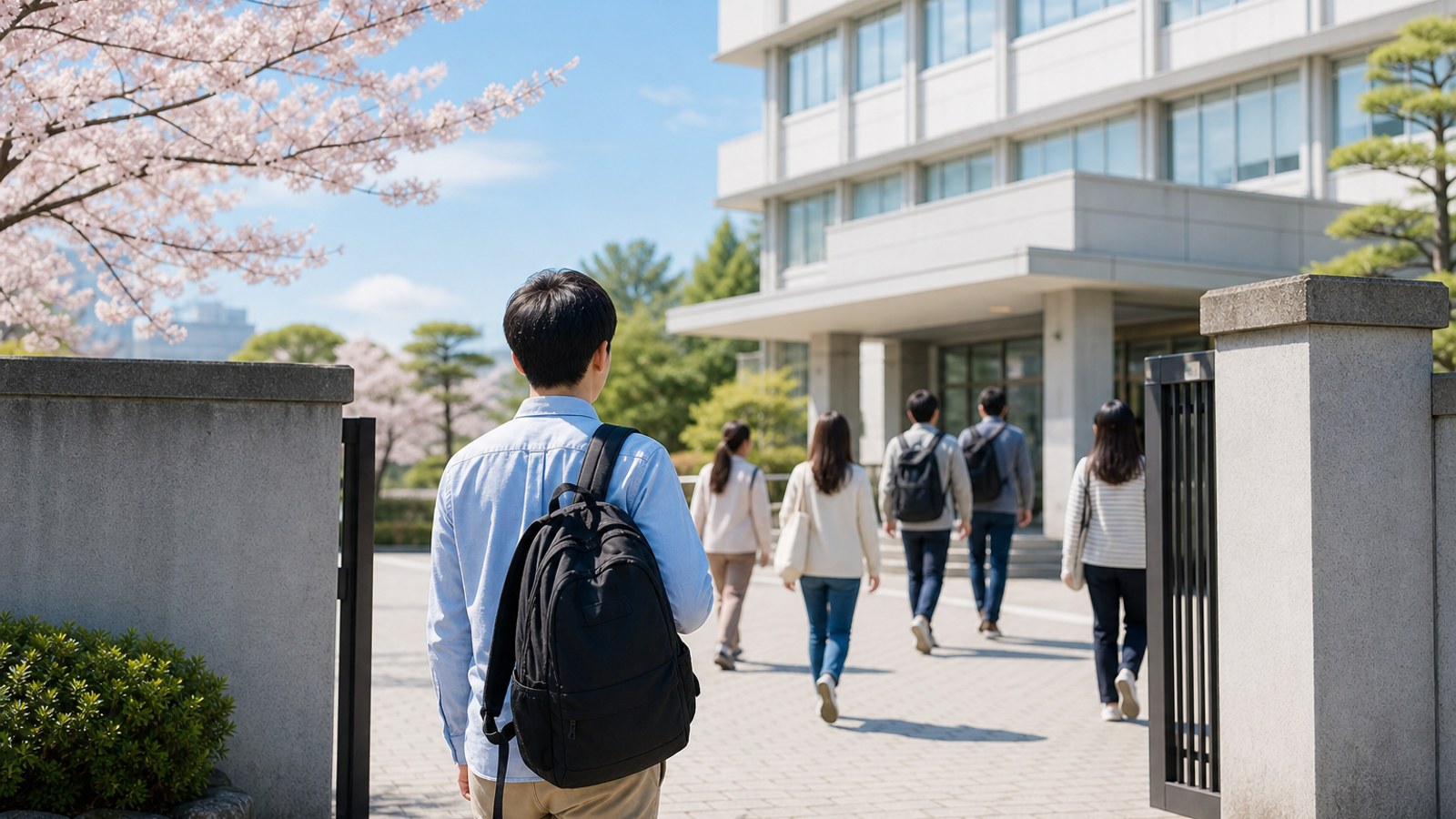
For international students at a Japanese language school, attendance matters not only for taking classes but also for protecting your status of residence. Many people worry: "At what point do absences become a problem?" and "What happens if I am absent because of illness?" This guide explains the attendance rules in the standards for Japanese language schools and their effect on extending your period of stay, based on public sources.
The official pages listed below were checked on 13 November 2026. Rules can change. Individual decisions are made by the Immigration Services Agency of Japan, and school rules differ from school to school. If you have trouble with attendance, talk to your school early. This guide does not guarantee an extension of your period of stay or your status of residence.
What to know first
- Your school records attendance for each "unit hour" (one class period) and calculates your attendance rate from that. Check your school's explanation for the length of a unit hour.
- Under the Immigration Services Agency's "Notification Standards for Japanese Language Educational Institutions," the school must give guidance for improvement to an international student whose attendance rate for a month falls below 80%.
- At notified Japanese language educational institutions (告示日本語教育機関), for a student whose attendance rate for a month falls below 50%, the school must report to the Regional Immigration Services Bureau by the end of the following month.
- Absences for unavoidable reasons such as illness are excluded from these standards (the school checks the circumstances).
- If your attendance rate falls, an extension of your period of stay may not be granted. The Immigration Services Agency decides whether you can extend, case by case.
The explanation of 80% and 50% in this article is based mainly on the Immigration Services Agency's "Notification Standards for Japanese Language Educational Institutions." For "certified Japanese language educational institutions" (認定日本語教育機関), which are certified by the Minister of Education, Culture, Sports, Science and Technology, there are guidelines from MEXT and the Immigration Services Agency. The guidance for attendance below 80% is the same, but for attendance below 50% they state that the school checks and records the name of the student's part-time workplace. How the report to Immigration is written differs from the notification standards. Ask your school which system it falls under.
How is the attendance rate counted?
The notification standards define the monthly attendance rate as "the number of unit hours attended in that month" divided by "the number of unit hours the student should have attended." Check your school's explanation for the length of a unit hour and how classes are divided. The standards require the school to take measures to accurately keep track of each student's attendance for every unit hour, and to keep those records for at least one year after the student is no longer enrolled.
For that reason, not only a full day's absence but also arriving late or leaving early may be counted as time you did not attend out of the time you should have attended. How lateness and early departure are handled can differ by school rules, so check your school's explanation when you enrol.
If you fall below 80%
The notification standards say that, for a student whose attendance rate for a month falls below 80%, the school must give guidance for improvement until the monthly attendance rate is 80% or more, record the state of that guidance, and keep the records for at least one year after the student is no longer enrolled.
This 80% is the point at which the school begins guidance. The standards do not say that falling below 80% by itself means you lose your status of residence. However, if your attendance does not improve despite guidance, it may count against you in the extension review explained below.
If you fall below 50%
At notified Japanese language educational institutions, for a student whose attendance rate for a month falls below 50%, the school reports to the Regional Immigration Services Bureau by the end of the following month. If that student has permission to engage in activity other than that permitted by the status of residence previously granted (資格外活動許可, permission for part-time work), the name of the organization where the student works is also reported.
In other words, at notified institutions, when attendance falls below 50%, Immigration is informed not only of the attendance situation but also of the part-time work situation. At certified Japanese language educational institutions, a separate guideline says that when attendance falls below 50%, the school checks and records the name of the part-time workplace (see "What to know first" above).
If you are absent because of illness or similar reasons
Both the 80% and 50% standards carry a proviso: "This does not apply to an international student who was absent due to illness or other unavoidable reasons." Absences that the school can confirm as unavoidable, such as illness, may be excluded from the standards for guidance and reporting.
However, what counts as an unavoidable reason, and what documents (such as a medical certificate) you must give the school, are decided by each school. If you are absent because of illness or injury, contact your school the same day. Keep documents that show the reason as far as you can.
Schools report attendance to Immigration
The notification standards require the school to report to the Regional Immigration Services Bureau, within three months after each period ends, the attendance rate of all international students over a six-month period and each student's month-by-month attendance during that period. When the Regional Immigration Services Bureau requests it, the school must also submit attendance records and similar materials.
Attendance is not only your personal matter. It is also an item the school reports to Immigration. For that reason, schools manage attendance carefully.
Extending your period of stay and attendance
If your period of stay is six months or longer, you can apply for an extension from three months before your period of stay expires (Immigration Services Agency). The extension documents include an attendance certificate and a transcript. Public information such as Study in Japan (JASSO) warns that if you are often absent, your attendance rate falls and your studies are neglected, an extension of your period of stay may not be granted. The Immigration Services Agency judges each person individually on whether to extend. No line such as "this percentage is safe" has been published.
The extension procedure, required documents and fee are explained in the guide to extending your period of stay.
If you do not go to school for three months or more
Separately from the attendance standards, if you have not carried out the activity of studying (attending school) for three months or more without a justifiable reason, your status of residence may be revoked. Notifications when you change, leave or take leave from a school, and the details of revocation, are summarized in the guide to your status of residence when you change schools, withdraw or take leave.
Part-time work and attendance
The Immigration Services Agency, in principle, limits the activity outside the permitted status (part-time work) of international students to 28 hours per week (8 hours per day during long school holidays). Public sources also repeatedly warn about cases where part-time work leads students to neglect their studies and attend less.
Schools are expected to have a system to keep track of and guide students' part-time work (workplace, hours, content). The Immigration Services Agency's Q&A says the school checks the student's part-time work once every three months. The check may be based on the student's own report. Some schools ask students to notify them of their workplace or report their working hours.
Paying tuition and living costs from part-time work alone is not allowed (Immigration Services Agency). Increasing part-time work and missing classes is the kind of behavior that tends to have a bad effect on both your attendance rate and your extension. For the details of the rules, see the guide to part-time work for international students.
How to protect your attendance rate
- When you enrol, check the school's rules on attendance (lateness, leaving early, how to report an absence, documents for illness).
- When you are absent, always contact the school the same day.
- If you are absent because of illness or injury, keep documents that show the reason, such as a medical certificate.
- Decide your part-time hours based on both your class hours and the 28-hours-per-week limit.
- If your attendance rate has fallen, talk early to your teacher or the person in charge of student guidance.
- Do not ignore the school's guidance.
When choosing a school, it is reassuring to ask how it manages attendance and whether it offers make-up lessons when you are absent. See how to choose a Japanese language school and the list of Japanese language schools.
Frequently asked questions
Below what attendance rate is my visa revoked?
The Immigration Services Agency's materials do not give a line such as "your status of residence is revoked below a certain percentage." What the notification standards set out are the school's duties: guidance when attendance falls below 80% in a month, and a report to Immigration when it falls below 50% in a month. Whether you can extend is decided by the Immigration Services Agency case by case, including your attendance.
If I am absent because of illness, does it count in my attendance rate?
The 80% and 50% standards in the notification standards exclude absences for unavoidable reasons such as illness. Ask your school what documents are needed.
Do lateness and leaving early affect my attendance rate?
The attendance rate is calculated from the number of unit hours attended out of the number of unit hours you should have attended. Because attendance is recorded for each class period, lateness and early departure may also not count as time attended. Check your school's rules on how they are handled.
What happens when the school reports to Immigration?
The Immigration Services Agency's materials do not show what automatically happens after a report. What follows depends on the individual situation, so if you are contacted about your attendance, talk with your school.
What to do next
Attendance rules go together with school rules. Before you apply, check the attendance rules in the application guidelines. You can contact schools, but this site does not guarantee admission or a visa. Decisions on individual status of residence are made by the Immigration Services Agency. This site is free to use.
Sources
- Immigration Services Agency of Japan: Notification Standards for Japanese Language Educational Institutions (partially revised 1 June 2025 (Reiwa 7); attendance rate provisions including items 36, 37, 39 and 46)
- Immigration Services Agency of Japan: Q&A on a partial review of the operation concerning persons entering Japanese language educational institutions (as of 19 May 2026 (Reiwa 8); checking of activity outside permitted status)
- Immigration Services Agency of Japan: For those considering enrolling in a Japanese language educational institution (period of enrolment, part-time work)
- Study in Japan (JASSO): Procedures related to status of residence
- Ministry of Education, Culture, Sports, Science and Technology and Immigration Services Agency of Japan: Guidelines on the operation of certified Japanese language educational institutions concerning attendance management and support for continued residence
- Study in Japan (JASSO): Part-time jobs (attendance rate and extension)
- Immigration Services Agency of Japan: On a partial review of the operation concerning persons entering Japanese language educational institutions (keeping track of activity outside permitted status)
- Immigration Services Agency of Japan: Immigration and residence examination Q&A (revocation of status of residence, etc.)
- Immigration Services Agency of Japan: Application for permission to extend the period of stay
- Immigration Services Agency of Japan
- Study in Japan (JASSO)