
After Language School: Requirements and Steps for Going to University or Vocational School in Japan
Published: · Updated:
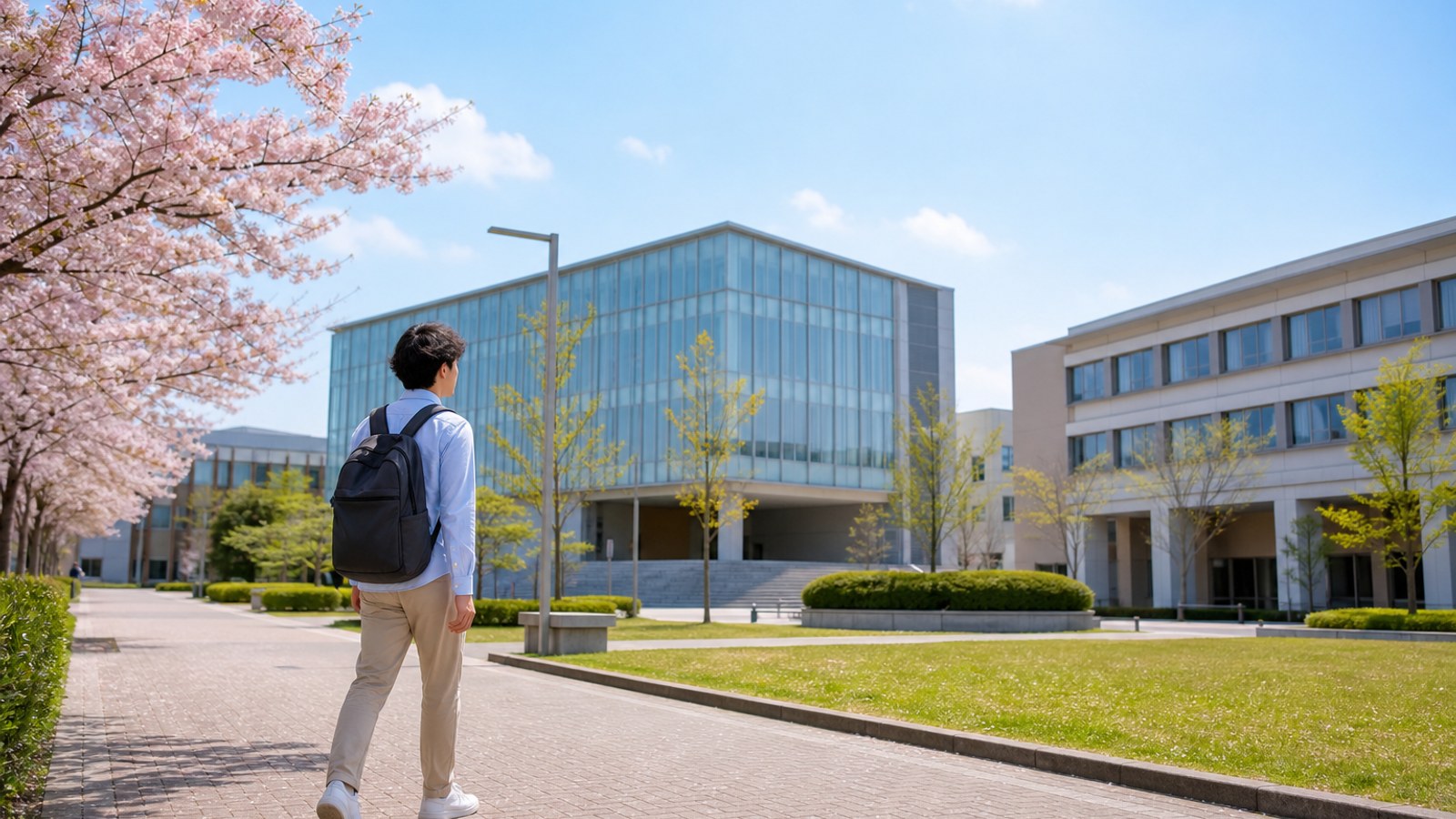
A Japanese language school is usually a first step, not the goal. Students who want to continue their studies go on to a university or a vocational school after learning Japanese. This guide explains the kinds of schools you can go to, the requirements, and the steps to prepare, using official information. Knowing this before you decide can change how you choose a language school and how you think about your intake month.
We checked the official pages listed at the bottom on 7 November 2026. Requirements and schedules differ by school and can change. Use this guide as a map, and always confirm the details in the admission guidelines of the school you want to enter before you apply.
Kinds of schools you can go to
These are the main destinations described by Study in Japan (JASSO).
| Destination | What it is | Length |
|---|---|---|
| University | Study in an undergraduate program and earn a degree | Generally 4 years (6 years for medicine, dentistry, veterinary medicine and some pharmacy programs) |
| Junior college | A shorter course than a university | 2 or 3 years |
| Vocational school (a postsecondary course at a specialized training college) | Practical skills for a job. There are eight fields: industry, agriculture, medical care, hygiene, education and social welfare, commercial practice, dressmaking and home economics, and culture and liberal arts | Diploma: 2 years or more (62 credits or more, 1,700 class hours or more). Advanced diploma: 4 years or more (124 credits or more, 3,400 class hours or more) |
There are also programs such as the non-degree programs for international students at private universities and junior colleges, which teach Japanese and the basics for study at a university.
After a vocational school, a diploma makes you eligible to transfer to a university, and an advanced diploma makes you eligible to enter a graduate school. Junior college graduates and others may be able to transfer into the second or third year of a four-year university. However, some universities do not accept transfer students, and credits may not carry over automatically, so ask the school well in advance.
Requirements for going on to further study
Requirements depend on the school and on the language of instruction (Japanese or English).
Schooling
University
- In principle you need to have completed 12 years of school education.
- If your school education in your home country is shorter than 12 years, you may be able to apply after completing a "university preparatory course" designated by the Ministry of Education (MEXT).
- If you are 18 or older and have passed a qualification exam recognized as equivalent to completing 12 years of school education, you may also meet the application requirement. However, if your original schooling was shorter than 12 years, you also need to complete a designated preparatory course or training institution course. Ask the embassy or the school which exam counts as equivalent to 12 years.
Vocational school
- If you come from a country with 12 years or more of school education, you need to have completed 12 years.
- If you come from a country with fewer than 12 years, there are several routes. Examples are completing 11 years plus a designated preparatory course, completing a designated course of 11 years or more, or passing a qualification exam at the high school completion level plus a preparatory course. Be sure to ask the vocational school which one applies to you.
Ask the school you want to enter, and the embassy if necessary, which category your country's school system falls into.
Japanese ability
Universities that teach in Japanese
- As a guide, passing JLPT N1 or N2 and scoring around 250 points on the Japanese subject of the EJU (excluding the writing section) are shown as benchmarks.
Vocational schools
Classes are in Japanese. You need to meet one of the following:
- You have received a period of Japanese language education at a Japanese language institution designated by the Minister of Justice or a similar institution. The required period can differ by school, year and source, so be sure to check the latest admission guidelines of the school you want to enter.
- You passed JLPT N1 or N2.
- You scored 200 points or more on the Japanese subject of the EJU.
- You scored 400 points or more on the BJT Business Japanese Proficiency Test.
- You studied for one year or more at an elementary, junior high or high school in Japan.
The Immigration Services Agency says that to follow classes in Japanese at a higher education institution, you need Japanese of level B2 or higher on the Framework for Reference of Japanese Language Education. The A1-equivalent ability checked when you enter a Japanese language institution is not enough for classes at a university or vocational school. Vocational school requirements can differ by school and year, so always check the admission guidelines of the school you want to enter.
Universities that teach in English
- As a guide for undergraduate programs, a TOEFL iBT score of 71 to 80 or an IELTS score of 5.5 to 6 is shown.
How many hours of Japanese study
According to JASSO, to follow classes at a university you need about JLPT N1 or N2 level, and 600 to 900 hours or more of study is given as a guide. The period you can stay at a Japanese language school is usually up to two years. Count back from when you want to go on to further study and set a Japanese goal.
What is the EJU?
The EJU measures the Japanese ability and basic academic ability needed to enter Japanese universities and other schools. It has subjects such as Japanese, science, Japan and the World, and mathematics, and the university you apply to decides which ones you take. The Japanese subject is given in Japanese, and the other subjects can be taken in Japanese or English.
In 2026 it is held on 21 June (1st session) and 8 November (2nd session). Results are expected in late July for the 1st session and mid-December for the 2nd. Dates change from year to year. Check JASSO's latest information for venues, application periods and fees.
Whether to use the EJU depends on the school. Some schools hold their own entrance exams, and some choose students by documents and interviews.
Intake and application timing
- The academic year of Japanese universities starts in April. Some universities also have an autumn intake in September or October.
- Intake and application periods for vocational schools differ by school. The JASSO page does not list fixed dates.
- Check each school for its application deadline.
For how to think about this together with the intake month of your language school, see the April vs October intake guide.
Documents usually required when you apply
For universities, these documents are generally requested. They differ by school.
- Application form
- High school graduation certificate
- High school transcript
- Letter of recommendation from a principal or teacher
- Documents showing your Japanese or English ability
Translations into Japanese or English may also be requested. Because some documents must be prepared in your home country, it helps to check before you go to Japan whether you can get them.
What to ask a Japanese language school if you plan to continue
- Results and support: Where do graduates go on to study? Is there advice on further study or help with application documents?
- Courses for further study: Is there a course for students going on to further study? Is there JLPT or EJU preparation?
- Level placement: How are classes divided by level, and how many students are in a class?
- Period: Do the intake months and course length fit when you want to go on?
- Costs: You will pay separate fees after you move on. See the cost guide for the costs of language school and living.
For a full checklist for choosing a school, see How to Choose a Japanese Language School.
Frequently asked questions
Do I have to go on to further study after language school?
No. However, the period you can stay on the "Student" status at a Japanese language school is usually up to two years. Think early about what to do afterwards, according to your goals.
If I pass JLPT N2, can I enter a university?
No. It is only one of the Japanese ability conditions. There are also schooling requirements, tests such as the EJU, documents and the school's selection. Check the admission guidelines of the school.
Do I have to take the EJU?
It depends on the school. Some universities ask for EJU scores, and others choose students with their own exams, documents and interviews.
Which is better, a vocational school or a university?
It depends on your goal. A vocational school teaches practical skills for a job. A university lets you study broadly in an undergraduate program and earn a degree. Ask the schools about fields, length, costs and what you can do after graduating, and compare.
What if I do not have 12 years of school education?
For universities, you may be able to apply after completing a preparatory course designated by MEXT. For vocational schools too, some countries require 11 years plus a designated preparatory course, among other routes. Ask the school you want to enter.
What to do next
To look for schools with further study in mind, compare intake months, fees, dormitories and support after graduation in the school list. For the full process, see How to Study in Japan from Nepal. If you need help, contact us. This site is free to use. We do not guarantee admission or a visa.
Sources
- Study in Japan (JASSO): Universities
- Study in Japan (JASSO): Vocational schools
- Study in Japan (JASSO): Japanese language institutions
- JASSO: EJU schedule
- Immigration Services Agency of Japan: For those considering entering a Japanese language institution
- Immigration Services Agency of Japan
- Study in Japan (JASSO)